Wednesday, March 30, 2022
Private employment as help for refugees from Ukraine

Sunday, March 6, 2022
The threat of world war

Wednesday, November 10, 2021
Execution is effective before the appeal is disposed of !!!
Four years ago, Mokim and Jharur were executed in Jessore Jail. The incident came to light when the appeal came up for hearing. Demands a judicial inquiry. Lawyers say it is unprecedented. Family surprised!!
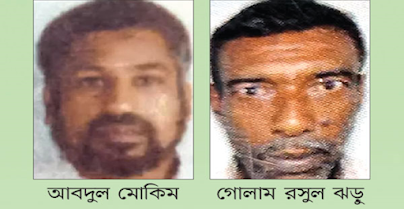
Abdul Mokim and Golam Rasul Jharu of Chuadanga were hanged four years ago. Their lawyer alleged that the sentence was carried out before the start of the appeal hearing. This incident, which is unprecedented in the history of the country, took place in Jessore Central Jail. The incident came to light when the appeals of the two persons came on the agenda of the Appellate Division of the Supreme Court for hearing. Mokim and Jharu's appeal was ranked 11th in the agenda for hearing in a bench headed by the Chief Justice yesterday. However, no hearing was held. Later, Humayun Kabir, the lawyer involved in the case, confirmed the matter to reporters. He demanded a judicial inquiry into the incident. It has also been confirmed that there was no death sentence in any other case against these two persons. Mokim and Jharu's home is in Durlavpur village of Alamdanga Kumari Union in Chuadanga. Karasutra said that their sentence came into effect on November 16, 2017. Mokim's family expressed surprise at the incident. Injustice that seeks justice. According to the law, if an accused is sentenced to death in a judicial court, it needs the permission of the High Court. After the death sentence is approved by the High Court, it has to follow some more effective procedures. However, if the appeal is filed after the High Court approves the death sentence of an accused, the Appellate Division goes to the jail authorities and the concerned deputy commissioner for guidance in this regard. As a result, the sentence was suspended for that period. The lawyer said that these rules were not followed in the execution of Mokim and Jharo. Supreme Court lawyers also say the incident is unprecedented. They said the sentences of the two men could have been reduced if the appeal had been heard. There are many instances of punishment reduction. There is no chance to look at the matter lightly. They said that before the appeal is disposed of, strict action should be taken against those responsible by finding out how the death sentence was carried out through investigation. Jessore Central Jail authorities have acknowledged the fact that Mokim and Jharu were executed. Abu Taleb was in the district when the death sentence was carried out. His statement on the matter was not known. However, Tuhinkanti Khan of the present district claimed that they had a written order of the High Court regarding the execution of the two accused. The two accused apologized to the President, they also have the documents.
Meanwhile, Khulna Divisional Deputy Inspector General of Prisons. Chagir Mia told reporters, "We have seen the execution of two convicts in Jessore Central Jail before the appeal was disposed of." We are examining the file. ' Monwar Hossain was killed. In that case, his cousin. Ahimuddin filed a case against 26 people. The names of Mokim and Jharu appear in the statement of case. Chuadanga Additional Sessions Judge Court-2 sentenced three people to death, two to life imprisonment and acquitted the other accused in the case on April 17, 2008. The convicts were Abul Kalam Azad, the then UP chairman of the same union, Mokim and Jharu.
Following the verdict of the trial court, the case came to the High Court for approval of the death sentence of the accused as per the rules. The death reference number of the case was 39/2008. Following the hearing, the High Court upheld the death sentence of Mokim and Jharo and announced the verdict of the case on July 6 and 7, 2013. The rest of the accused were acquitted. Later, Mokim (Appeal No. 111/2013) and Jharu (Appeal No. 106/2013) appealed to the Appellate Division of the Supreme Court. Supreme Court lawyer Md. Humauon Kabir got the responsibility to supervise the appeal case on behalf of Mokim. Eight years have passed since then. After a long time, the case recently came up for hearing by the Appellate Division. After the case was listed for hearing, the family of the poor Mokim was contacted and it was learned that the jail authorities had executed Mokim in 2017 before the appeal was disposed of. Even the death sentence of another accused Jharo has been executed. Lawyer Humayun Kabir said, "I myself have found out the truth of the incident while supervising the case. Judge Mokim was in the condom cell. By contacting the family of the petitioner, it has been confirmed that the death sentence of the condom prisoner Mokim and Jharo has already been carried out. Basically, the Mokim and Jharu families are very poor. So the family members could not find out the details of the case on their behalf. 'The lawyer said that they could not afford that. Meanwhile, Mokim's lawyer for the hearing in the Appellate Division. Asif Hasan told reporters, "Initially, it seems that the jail authorities are responsible for this incident. Therefore, in this case, we will seek a judicial investigation from the Appellate Division. I will seek appropriate justice for the negligence of those who caused this incident. I will seek necessary directions from the Supreme Court so that such incidents do not happen in the future. At the same time, I will demand appropriate compensation for the families of the victims. ' "There was only one murder case against my husband," Farzana told Bangladesh Pratidin. He was hanged four years ago in this case. He was buried at Bholadanga village in Meherpur. I live here with my only son. Now I hear that the case is not over. We have been wronged. We want justice for this. 'Anjira Begum, Jharu's wife, told the Chuadanga correspondent, I have left the matter to Allah. 'Lawyers say it is unprecedented: Senior Supreme Court lawyer Mohammad Yusuf Hossain Humayun said after the incident, Is. If the court waives the delay and accepts the case for hearing the appeal, then there is no chance of execution of the sentence before the appeal is disposed of. Because if the appeal is heard, the sentence of the accused may be reduced. 'Before the appeal hearing, the former secretary of the Supreme Court Bar Association, Dr. Momtaz Uddin Ahmed Mehedi. "It simply came to our notice then. In no case can the death sentence be carried out before the appeal is disposed of. There is no chance of taking the matter lightly. 'He said,' We have to find out why and how their death sentence was carried out. At the same time, strict action must be taken against those responsible. '
Source: Daily Protidin
Monday, July 26, 2021
Teesta River Management Project for Bangladesh: Why India Protest!
 |
| File Phot: Tista River |
One of the topics discussed on social media was that
the proposed Teesta river water resources management project was not being
submitted to the ECNEC for approval in the face of Indian objections, despite
its final preparation. About three years ago, Bangladesh Prime Minister Sheikh
Hasina requested Chinese President Xi Jinping about the project. China has
turned the Huang Ho River, once known as the "Sorrow of China", into
a "blessing." In the same vein, the Prime Minister's request was how
to modernize the water management of the Teesta River, which is a disaster for
the people of the north-western districts of Bangladesh every year, through a
multi-faceted project. In response to that request, the project proposal was
handed over to Bangladesh by China a few months ago after the feasibility study
of the proposed Teesta River project with full Chinese funding was received and
implemented. At the same time, China offered to provide a loan to Bangladesh
for the implementation of the project.
In the proposed Teesta River project, the depth of
the middle river will be increased to 10 meters and the width of the river will
be greatly reduced by carrying out massive excavation of 115 km of the river
Teesta within the borders of Bangladesh. At the same time, opportunities for
cultivation will be created by rescuing land through river management. A 115 km
long four lane road will be constructed along the two banks of the river.
Irrigation system will be developed in the dry season on the cultivable lands
on both the banks of the river by constructing several barrages-cum-roads at
suitable places to ensure communication between the two banks of the river as
well as by conserving the huge surplus water of the river flowing during
monsoon. In addition, extensive industrialization and urbanization facilities will
be built along the roads on both the banks of the river.
India believes that China's participation in the
project will be dangerous for the security of its northeastern part of the
country and is therefore directly pressuring Bangladesh to cancel the project.
If China joins the Teesta project, hundreds or thousands of Chinese nationals
will be located near the 'chicken neck' in India's Siliguri corridor, which is
not acceptable to India. That is why Bangladesh is being asked to withdraw from
this project. It is also rumored that India has assured Bangladesh that if
Mamata Banerjee is ousted from power in the March-April elections in West
Bengal, India will no longer be a hindrance to the signing of the Teesta Water
Sharing Agreement, which has been stalled since 2011.
The question that must be answered by the ruling
class of our country is, as an independent and sovereign country, can we not
independently take up projects in our interest? India is our friend, but there
is no chance of bowing to any unjust pressure from India.
Indian High Commissioner to Bangladesh Vikram
Doraiswamy claimed at a meeting of the Diplomatic Correspondents Association of
Bangladesh (DICAB) in Dhaka last February 15 that "India does not have
'grandfathering' with Bangladesh." Now, if any project in the interest of
Bangladesh is dropped due to Indian pressure, what shall we call it? Why would
Chinese engineers and technicians engaged in a river management project be a
threat to India's state security? The ‘Siliguri Chicken Neck’ is far from the
area through which the Teesta River enters Bangladesh from India. And how did
the Chinese nationals who will be located in the project area several
kilometers from the Bangladesh-India border become a sensitive issue for India?
We recall that the Chinese-funded deep seaport
project in Sonadia, Bangladesh, was canceled due to Indian opposition. With the
construction of a good alternative deep seaport at Matarbari in Maheshkhali,
the construction work of that port is now progressing fast with the funding of
Japan.
We see that despite the border dispute, India
continues to trade about 100 billion in
foreign trade with China. However, India is opposing Bangladesh on various
pretexts when it comes to borrowing from China on easy terms to develop its own
economic infrastructure. We know that the loan assistance that India has given
to Bangladesh in various projects is so difficult that in reality Bangladesh is
not able to use that loan assistance.
The Teesta is a historically whimsical river. Almost
every year in the monsoon season, the north-western part of Bangladesh is
flooded due to this river. The people of this area, which is relatively dry
during the dry season, are also deprived of irrigation facilities due to the
scarcity of water in the Teesta River. The Bangladesh part of the Teesta River
remains waterless for most of the year after India unilaterally constructed a
dam at Ghazaldoba in West Bengal upstream of the Teesta River and completely
blocked the Teesta water in the dry season. When the two countries reached the
threshold of signing the Teesta water sharing agreement in 2011, the Chief
Minister of West Bengal protested and for that the bowing to the objections of
her, Dr. Manmohan Singh withdrew from signing the agreement.
India has long suspended the Teesta water sharing
agreement. But now that the proposed Teesta project has come to the fore, the
Teesta agreement is being assured to be signed. What needs to be considered
here is that the Teesta Treaty and the proposed Teesta project are not at all
conflicting. With or without the Teesta Treaty, the Teesta project is expected
to bring about a landmark change in the lives and livelihoods of the people of
the region. If the agreement is reached, the water level of the river may
increase a little in the dry season, but opening all the gates of Ghazaldoba
Barrage in the rainy season will not solve the floods that the people of this
region are facing!
Sustainable water from the proposed project
reservoirs can be used in a planned irrigation system to find a sustainable
solution to this problem. After discussing various aspects of the project, the
people of the area have become more enthusiastic about the project. There have
been several human chains and processions in the north-west of the country
recently for the immediate implementation of the project. I humbly request the
Prime Minister not to delay the approval of the Teesta River project.
Sources: The Prothom Alo and others
Wednesday, July 14, 2021
A month of rain in 90 minutes in London, massive flood damage

The British capital, London, was hit by a torrential downpour in just 90 minutes on Monday evening. The floodwaters also flooded homes, shops and restaurants. The water receded on Tuesday, causing chaos and extensive damage.
Fearing the ceiling would collapse, the London Fire Brigade received nearly a thousand calls and rescue teams assisted in retrieving the property. Near Notting Hill's famous Portobello Market, the courtyard of the Portobello Star Pub and then the basement were flooded. While cleaning it on Tuesday, a worker named Francis said, ‘The amount of damage done in just one hour is unbelievable. After the epidemic closed everything started to open again. The floods hit him again. '
Meanwhile, nearby Italian restaurants CC Tuya and Osseteria Romana, which opened two months ago, were completely flooded. "It's a tragedy," said one worker. The kitchen below is filled with water. Jean-Christophe Paget, owner of the French bakery Mason Putt, said he needed to replace a 50,000-pound stove that was lost in the water. "It was a terrible blow," said Bruno Pires, owner of Gourmet Caf on Portobello Road. The water in the basement was up to my chest. The refrigerators were washed away. '
Camilla Marie-Rose, head of
digital marketing in West London, wrote on Twitter: "Horrible sight in
Maida Valley, many families lost so much in such a short time and so
heartbreaking." The cars were all swept away. One is seen leaving his
sunken Mercedes and coming out barefoot. Source: Evening Standard.
What are described in the Holy Quran about the viruses!

Tuesday, July 13, 2021
Moon to change place after 9 years, the world will see a terrible flood!
